Showing posts with label Authors. Show all posts

Sunday, January 10, 2021

Carmine Capobianco

Waterbury lost one of its greats this weekend. Carmine Capobianco lived his live to its fullest and left behind creative work that will help future historians understand Waterbury in 20th century. I consider myself very fortunate to have known him. He was a genuinely kind, warm-hearted person with a sense of humor that made the world a little brighter.

Carmine Capobianco
Photo from his Facebook page


Saturday, October 31, 2015

"Mary Della"

While doing some research into Waterbury history, I stumbled onto a serialized novel from 1929, firmly set in Waterbury. Serialized novels were tremendously popular during the 1800s--most of the famous novels from that era first appeared in serial format in newspapers. The format continued into the 1900s, but eventually lost popularity. Serialized storytelling moved into radio and, eventually, television, where it continues to thrive today.

This particular serialized novel was titled "Mary Della" and was written by someone named Julie Anne Moore. There's no sign of Julie Anne Moore other than being listed as the author of this and other stories. I'm assuming Julie Anne Moore was a pen name. (I'll do some additional research later this week to see if I can find out more about her.)

"Mary Della" was serialized by The Independent Syndicate, a company based in Washington, D.C. It ran in newspapers all over the country, but not simultaneously. Some papers started running it in 1929, others in 1930. Some included photographic illustrations, others ran the installments without any illustrations.

Wednesday, July 29, 2015

Brass City Comic Con 6

Naugatuck Valley Community College once again hosted Waterbury's own comic book convention, the sixth annual Brass City Comic Con, on Sunday July 26. As always, it was a great event for families and anyone wanting to meet real live comics professionals. No lines, and plenty of accomplished artists and authors happy to discuss their work.

A few of the great cosplayers at the Brass City Comic Con.

Monday, September 23, 2013

Waterbury and the Underground Railroad

During the decades leading up to the Civil War, the anti-slavery (abolition) movement became increasingly influential. In Connecticut, slavery was gradually phased out. The last person to be enslaved in Waterbury was given her freedom shortly after 1810. In 1840, there were seventeen people enslaved in Connecticut; in 1848, the state finally outlawed slavery completely. Additionally, a Connecticut law from 1844 prohibited any fugitive slave escaping to this state from being arrested or detained and returned to his owner.

It's tempting to pat ourselves on the back and feel good about Connecticut having given up slavery before the Civil War, but it's very misleading to think that all of Connecticut opposed slavery. Throughout the state, some were adamantly opposed, viewing slavery as an evil to be eradicated, but many were ambivalent--slavery was an abstract concept, something that happened far away, something that didn't impact them directly.

In Waterbury, as in every other town in Connecticut, there were people who supported the right of southern states to continue slavery. Green Kendrick, one of Waterbury's most prominent citizens, was originally from North Carolina and was a public supporter of slavery. Kendrick was also a supporter of sending free blacks to Liberia, donating to the American Colonization Society in 1858.

Waterbury also had active abolitionists and two safe houses on the Underground Railroad. The Underground Railroad was a loose, dangerous route traveled by people who escaped from slavery. Escaped slaves, if discovered by the wrong person, could be captured and returned to slavery. At each safe house on the Underground Railroad, refugees would be given a place to sleep and food to eat, before being given transportation to the next stop north.

From Waterbury, refugees most likely continued on to Plymouth, then to Torrington and Winsted, continuing north until they reached Canada. It was a dangerous, furtive path to take, with no guarantees of safety.

In 1860, a refugee, traveling alone, made it as far as Stamford, where he hired someone with a wagon to take him to Norwalk (the story was related in the Columbian Register newspaper, January 28, 1860). The refugee, unnamed in the newspaper article, for unknown reasons (but we can imagine!), suddenly leapt out of the wagon, leaving his coat behind. The wagon driver rifled through his pockets, decided that he must be an escaped criminal, and chased him into a Presbyterian Church. Apparently the man was briefly held captive, until a Trustee of the church arrived, figured out that he was an escaped slave from Charlestown, Virginia, and ordered him to be set free. The story had a happy ending, with the refugee given a place to stay for the night and safe passage to an underground railroad station, but it highlights some of the risks involved.

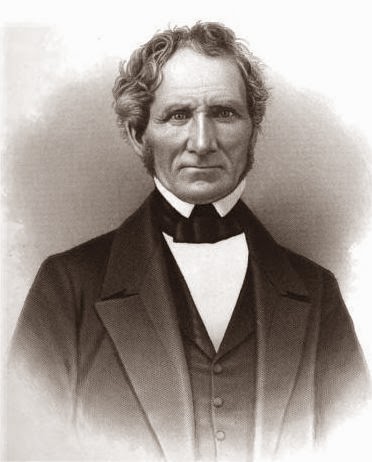
Back in Waterbury, Timothy Porter, a deacon in the Baptist church (and grandfather of Carrie Welton), was a firm believer that slavery was wrong. Beginning around 1840, Porter decided that abolishing slavery was his mission in life. For the next two decades, he hosted anti-slavery meetings in his home and, on one memorable occasion, publicly debated the topic with Green Kendrick. Porter also helped escaped slaves on their journey to freedom in Canada, using his home as a stop on the Underground Railroad. I have not yet been able to identify where his house was; the building is unlikely to still be standing, but it is still worthwhile to track down the approximate location.


Timothy Porter, illustrated in
Anderson's History of Waterbury, Volume III

Timothy Porter's opposition to slavery may have been shaped by his family history. His great-uncle was Dr. Preserved Porter, a slave owner who, when one of his slaves, a man named Fortune, died, chose to dissect the body, boiling the bones and keeping them for medical study. Fortune's skeleton remained with Dr. Porter's son--Timothy Porter was six when Fortune died, and would have been well aware of what happened to him.


John Miles Stocking, a deacon in the Congregational church, was the other Waterbury abolitionist who was active in the Underground Railroad. Stocking had a barn which he used as a resting station for escaped slaves. Stocking raised his children to be anti-slavery, reading Uncle Tom's Cabin and other abolitionist material to them. The Stocking family took pride in knowing that every eligible man in their family served during the Civil war.


On a related note, Waterbury artist Louise Chessi McKinney has recently published two children's books about the Underground Railroad: The Journey to Freedom on the Underground Railroad and Follow the North Star. Check them out!

Friday, June 29, 2012

Richard III

Here are some photos from Friday night's performance of Shakespeare's Richard III in Library Park by Shakesperience Productions. The weather cooled off nicely, and there was a very pleasant breeze. The performance was great, with a very powerful ending.

There will be another performance Saturday at 8 p.m. and a final performance Sunday at 2 p.m. If you like theater, or Shakespeare, or just want to try something new, go see it.

Shakesperience will also be performing The Lion, The Witch, & The Wardrobe at 10 a.m. Sunday.


Nat Angstrom as Richard III


Before going to see Richard III, I went to a special book discussion at Barnes & Noble. Shakesperience's Artistic Director, Emily Mattina, and author Joan Szechtman discussed Richard III: Fact vs. Fiction, which was perfect as a lead-in to seeing the performance.

Sunday, July 31, 2011

Brass City Comic Con

I stopped by the Brass City Comic Con at NVCC this morning. What better place for a comic book convention than the city in which the first comic books were printed?

The event was organized by Legends of Superheros, a great local comic book store.


As always with a comic convention, there were more men than women, but it was definitely not a male-only event (just as comic books are not just for guys--I learned to read at an early age, thanks to Supergirl and Wonder Woman comics).


The convention was a mix of dealers and creators. That's one of the best parts of a convention--getting to meet the artists and writers.


Artist Dave Meikis with samples of his work.

Dave Meikis brought both original artwork and copies of his published work for Marvel and DC comics. As you can see from the photo above, he also brought the tools of his trade--artists typically spend their time at conventions creating new art. Meikis has been working as an inker since the mid-1990s.


Dan Moser, Creator/writer of Chaotic Soldiers, and friends.

Most people are probably aware of Marvel and DC comics, mega-publishers of familiar brands like Spiderman, X-Men, Batman and Superman. There are also smaller publishers like Dark Horse, which publishes Hellboy. Then there are the independent publishers and the self-publishers.


Cesar Feliciano working on a drawing.


The large publishers have a tendency to stick to a standard, proven formula with their comics and aren't looking to publish something different. Comic book creators often seek out small publishers for work that is more unique, or if they want to retain full creative control of what they do.


Carl Herring, Jr.

Carl Herring, Jr. is a Bridgeport comic book creator as well as the founder of Three J Productions. He began self-publishing in 1996. The comic book world is largely populated by white men. Female collectors and creators are rare, and black collectors and creators are even rarer.


Prof. William H. Foster III

William H. Foster, Professor of English at Naugatuck Valley Community College, is also a comic book collector and the author of Looking For a Face Like Mine. He has assembled an exhibit of covers from different decades, showing how black people have been depicted--sometimes heroically, sometimes offensively.


Prof. Foster's exhibit, "Changing Image of Blacks in Comics"


Also present, with samples of his work and drawing board at hand, was Milford-based caricature artist T. C. Ford, who was also the last Editor at Charlton Comics in Derby. Charlton was the publisher of some great comics, including work by artist Steve Ditko. Charlton's superhero line was bought by DC Comics in 1983, and Charlton Comics closed in 1985. Ford is now Publisher/Editor/Creator of United Comics, which publishes creator-owned comics.

Caricature artist T. C. Ford.


There were other creators present, but unfortunately I wasn't able to get good photos of them. And then, of course, there were the dealers with their boxes full of comics for sale.


Legends of Superheros table.

Plenty of discount boxes, but also a nice mix of higher-priced hard-to-find comics on display.


The next Waterbury convention will be this September, again organized by Legends of Superheros. The first annual ClassiConn will be held at the Coco Key Water Resort Hotel and Convention Center, September 23-25, which will make for a fun weekend.


ClassiConn will encompass comic books, sports cards and collectibles, as well as Magic tournaments all three days. Confirmed guests so far include Dwight "Doc" Gooden, pitcher for the Mets and Yankees, Dennis "Oil Can" Boyd and Bob Stanley, pitchers for the Red Sox.

Tuesday, May 31, 2011

Soldiers' Monument on the Green

Last week I attended a great program at the Mattatuck Museum. Dr. Matthew Warshauer, co-chair of the Connecticut Civil War Commemoration Committee and Professor of History at CCSU gave a presentation about Civil War monuments in Connecticut. Waterbury's Civil War monument is the Soldiers' Monument on the Green, erected in 1884 (although portions of the monument were not completed and installed until 1885 and 1886).


There's a lot of information available about the monument--Joseph Anderson published a book about it in 1886. I've read through the book to pull out the interpretive information for this blog post.

The sculptor was George Edwin Bissell, a veteran of the Civil War and a highly accomplished artist who lived in Waterbury for a period of time. He was working in Paris during the final planning of the design for the statue, and the bronze figures, reliefs and lamp posts were cast there in 1884.

The figure at the top of the monument represents Victory holding a laurel wreath for the Union soldiers in one hand, an olive branch for the Confederate soldiers in the other hand, and standing on a cornucopia predicting prosperity for the future.

Relief panels on the lower portion of the monument represent the Union troops charging a Confederate battery, and the battle of the Monitor and the Merrimac in 1862 (which has led some to call this the Soldiers' and Sailors' Monument).

Below Victory, facing west, is the Farmer who has taken up arms to defend the Union, stepping over a broken fence rail.


Facing north is the grizzled Veteran, laurels and palm branch at his feet, weary from the war and seated at the grave of one of his fellow soldiers.


Facing east is the Mechanic who, like the Farmer, has left his work to take up arms. Behind him is equipment used in brass rolling mills.


Originally, Bissell had proposed figures to represent the North, South, East and West regions of the country. The final design uses the Farmer and the Mechanic to represent the different walks of life from which the Union soldiers came. Bissell also originally planned to have Liberty calling the Nation to her defense, but the final design replaced Liberty with Victory.

Perhaps most significant is the vignette on the south side of the monument. At the program last week, Dr. Warshauer informed us that this is one of only two Civil War monuments in Connecticut to include a reference to the abolition of slavery (the other one is in Hartford), and it is the only one in Connecticut to use the word "Emancipation".

The vignette depicts a seated woman listening intently, her hands resting on an open book. Her feet rest on a cannon, next to which is a shackle which has been broken. The woman, as indicated by her hair ornament, represents the government of the United States. The well-dressed schoolboy to her right represents the North (Anderson wrote that this was because "children have no prejudices, and know no color-line", which is a great point--children are not naturally racist, it has to be taught to them).


The other boy represents the freed slaves, the South and African Americans in general. He is seated on a bale of cotton, holding a hoe in one hand while trying to access the book with his other hand. He is eager to learn, to share the quality education the white schoolboy receives. The vignette emphasizes the importance of education for success.

The Emancipation group as it looked in 1886, when it was published
in Joseph Anderson's History of the Soldiers' Monument.

The monument was dedicated on October 23, 1884. Originally, the ceremony was to include the illumination of the Green with a thousand Chinese lanterns, but a severe storm the day before interfered with that plan (but wouldn't that have been impressive!). The morning of the dedication, there was a last-minute, post-storm flurry of decorating. The downtown was covered in U.S. flags, flags of other countries (many Union soldiers were immigrants), and many other decorations.

Governors of several states attended, as well as numerous military dignitaries. The total number of people in attendance was estimated at somewhere between 20,000 and 30,000. A full description of the dedication, with transcripts of the speeches, is in Anderson's book.

Saturday, May 21, 2011

Waterbury's "House, M.D."

Dr. Lisa Sanders is an Internist and Attending Physician at Waterbury Hospital. She also works as a medical technical consultant for the t.v. show House. I'm currently reading her book, Every Patient Tells a Story: Medical Mysteries and the Art of Diagnosis. It's fascinating to see the doctors' side of things.


Dr. Sanders also writes for The New York Times (which is how the producers of House found her). She started out as a journalist, eventually entering the Yale School of Medicine at age 36, and combined the two interests for her column, called "Diagnosis". She now writes a NY Times blog called "Think Like a Doctor", in which she presents readers with aspects of real cases and invites them to offer a diagnosis (the case was previously solved by the real-life doctors involved).

She recently wrote about a case at St. Mary's Hospital in Waterbury. It's interesting reading.

In an interview for the April 2011 issue of Medical Marketing and Media, Dr. Sanders describes her practice in Waterbury as a great place for diagnostic detective work, that she has encountered exotic illnesses such as typhoid fever and dengue fever, in part because there are so many immigrants in Waterbury.

From now on, when I watch House, I will have to wonder if the case was inspired by one in Waterbury!

Tuesday, March 22, 2011

Waterbury Books: The '90s

Yesterday's post of Recent Waterbury Books received such an enthusiastic response I've decided to keep going, sorting them by decades. It takes many, many hours to create each of these lists, so it will be a while before I get to another one (I have to do things that pay the bills, and blogging has never earned me any money).

Keep sending me your suggestions, and I'll add them when I can.

Many of these are hard-to-find outside the Silas Bronson Library and Mattatuck Museum archives. I've added links to the most useful listing for each one, often simply Google Books, which gives you options to search for used copies or copies in libraries. John Bale Books has a few of them for sale.

When possible, I tracked down images of the book covers. But it wasn't possible for all of them.


Robert R. Bisaillon
Franco-American Biographies of the Greater Waterbury Area


Sando Bologna
The Italians of Waterbury; Experiences of Immigrants and Their Families


Growing Up Italian and American in Waterbury


Jeremy Brecher and Ruth Glasser
Essays on the Brass Workers History Project and the Waterbury Ethnic Music Project in Using Ethnographic Data: Interventions, Public Programming, and Public Policy 


Frederick W. Chesson
Waterbury (Images of America Series)


Claudia Clark
Radium Girls: Women and Industrial Health Reform, 1910-1935


Susan Hoffman Fishman
The Platt Brothers and Company: Ingenuity, Innovation and Integrity


Gary Franks
Searching for the Promised Land: An African American's Optimistic Odyssey


David J. Garrow
Liberty and Sexuality: The Right to Privacy and the Making of Roe v. Wade (extensive information about Clara McTernan's Waterbury clinic, which provided birth control for married women)


Ruth Glasser (Professor of Urban Studies at UConn-Waterbury)
Aqui Me Quedo: Puerto Ricans in Connecticut (also available from the Connecticut Humanities Council)

My Music is My Flag: Puerto Rican Musicians and Their New York Communities, 1917-1940 (discussion of the Waterbury Ethnic Music Project in the Preface)


Holy Trinity Greek Orthodox Church
Holy Trinity Greek Orthodox Church, Waterbury, Connecticut: 75th Anniversary, 1918-1993


Rachel Kerr Johnson, edited by Barbara Mitchell Tull
Affectionately, Rachel: letters from India, 1860-1884 (includes a marvelous letter describing Waterbury in 1860)


Adam Korpalski
A History of the University of Connecticut at Waterbury 1946-1996


Richard M. Marano
History of the Order Sons of Italy in America of Waterbury, Connecticut: 1911-1996


John Frederick Martin
Profits in the Wilderness: Entrepreneurship and the Founding of New England (references to early Waterbury)


Charles A. Monagan
The Country Club of Waterbury: (1899-1999)


Charles Turek Robinson
The New England Ghost Files (first chapter is a haunting in Waterbury)


Matthew W. Roth
The Platt Brothers and Company: Small Business in Manufacturing (Photo taken by John Bale Books, which currently has a copy for sale)


Saint Anne School
Centennial: Saint Anne School, Waterbury, Connecticut, 1890-1990


Saint Joseph Church
Saint Joseph Church, Waterbury, Connecticut: Centennial, 1894-1994


Ann Y. Smith
At Home in Waterbury: A History of the Neighborhoods of Waterbury

Janet Woolum
Outstanding Women Athletes (has short biography of Joan Joyce)

Monday, March 21, 2011

Recent Waterbury Books

Sometimes it seems like there's a new book written by a Waterbury author every time I turn around. It's getting hard to keep track of them all. Here's a start at making a list of authors and their recent Waterbury-related books. Not all the authors are from Waterbury, although most are. Only books with a Waterbury connection are listed, and only books first published since 2000 are included (I had some others on this post at first, but after 24 hours I realized I would have to put the books from the '90s in their own post). Most of the books are heavily about Waterbury, some have only a chapter about Waterbury or scattered references to Waterbury.

If I've overlooked a recent Waterbury book, let me know and I will add it!

George Black
The Trout Pool Paradox (Waterbury's impact on the Naugatuck and Shepaug Rivers)


Daniel Cavallari
Confusing the Seasons (the final chapter takes place in Waterbury)


Lawrence M. Cercola
Depression: A True Story


Barbara S. Christen and Steven Flanders, editors
Cass Gilbert, Life and Work (references to his work in Waterbury)


Connecticut Motor Coach Museum
Waterbury Trolleys (Images of Rail series)


Bernard F. Dick
Forever Mame: The Life of Rosalind Russell


Ferdinando Fasce
An American Family: The Great War and Corporate Culture in America


John Fusco
Paradise Salvage


Robert B. Gordon
Industrial Heritage in Northwest Connecticut: A Guide to History and Archaeology (references to Waterbury)


Raechel Guest
Houses of the Hillside Historic District


Joanna Clapps Herman
The Anarchist Bastard: Growing Up Italian in America


Jeremy J. Joyell
A Lifetime Ago: Before the Death of Childhood


Peter Haring Judd
Affection: Ninety Years of Family Letters, 1850s-1930s: Haring, White, Griggs, Judd Families of New York and Waterbury, Connecticut 


More Lasting Than Brass: A Thread of Family from Revolutionary New York to Industrial Connecticut


David R. Meyer
The Roots of American Industrialization (Creating the North American Landscape) (many references to Waterbury)


Evelyn B. Michaud
Under the Eaves: Reflections of An Ordinary Life


John S. Monagan
A Pleasant Institution: Key-C Major


William A. Monti
Publisher vs. Politician: A Clash of Local Titans


John Murray (preparer) and Silas Bronson Library
Waterbury Hall of Fame (available as a publication at the Bronson Library)


Edith Reynolds and John Murray (buy direct from the authors at John Bale Books on Grand Street, across from the post offce, or click below for the Amazon links)
A Brief History of Waterbury 


Wicked Waterbury: Madmen and Mayhem in the Brass City


Felix Manuel Rodriguez
Dad, Me and Muhammad Ali


Ann Y. Smith
Hidden in Plain Sight: the Whittemore Collection and the French Impressionists (references to Waterbury)


Andres Torres, editor
Latinos in New England (Chapter 4, "Mofongo Meets Mangu: Dominicans Reconfigure Latino Waterbury" by Ruth Glasser)


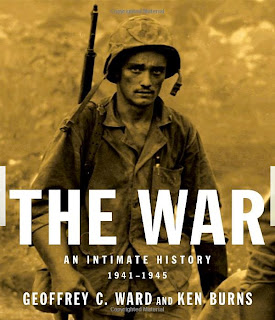
Geoffrey C. Ward and Ken Burns
The War


John Wiehn and Mark Heiss
Waterbury, 1890-1930 (Postcard History Series)


Bettejane Wesson
The View from Cracker Hill


Eric Zafran
Calder in Connecticut (several references to Waterbury)