Sunday, February 10, 2013

Blizzard of 2013

Friday Night

I stayed home from work Friday. After the trouble I had getting home after the comparatively minor snowstorm the week before, I figured I'd be better off respecting the power of a blizzard.

By 11 p.m., the plow had come up our street (the wrong way) several times, but the snow was piling up fast. It didn't seem too bad at this point.

Friday night, 11 p.m.


Saturday Morning

So much for "not too bad" -- this is a LOT of snow!


Same view as the photo above, seven hours later,
and everything is covered in thick blanket of snow.


Looking the other direction from the porch. The neighbor's car was
last shoveled out around midnight, so it's not as badly buried.


Conditions were still pretty brutal all morning. The snow had stopped falling, but
the wind was still creating near-white out conditions every so often.


The snow in the front yard was hip deep. It was a little like wading
through water. I felt like I ought to be able to dive in and start swimming.


Hey look! It's our car!


Saturday Afternoon

Shoveling was very discouraging. There's nowhere to put the snow. Our yard is too small to hold all of it without piling it up taller than ourselves, which is not an easy thing to do.

Eventually I noticed that there was a car in the middle of the road, preventing plows from getting down our street. Or, rather, UP our street, since the plow truck was driving the wrong way.
Probably something to do with his route and the fact that there really
should not have been anyone else trying to drive in the middle of the blizzard.


By early afternoon, a decent foot path was being developed, going down the middle of the street.

Later in the day, I ventured up to Oak Street to see what a plowed street looked like. Not so good. Instead of two lanes, there was only one. You can see that there simply is too much snow and nowhere for it to go.

My back yard, with a six foot drift in the corner.


Icicles dripping slowly.


The wind made some interesting patterns in the snow.


Sunday Afternoon

By Sunday afternoon, people were starting to get cranky, worrying about how they would get to work Monday, and how much trouble they will be in with their bosses if they can't get to work. People wondered why our street hasn't been plowed, and rumors about Town Plot being completely plowed out began to spread. The prevailing opinion was that our street, and our neighborhood, had been forgotten somehow. I decided it was time to go for a walk to see what conditions elsewhere really were like.

A couple of neighbors put a huge effort into clearing out their cars, resulting in a small open area.

Most of Wood Street is still buried, except for
the well-worn foot path.

I think it's fair to say that Young Street hasn't seen a plow at all.

Wood Street on the other side of Walnut is only slightly better than
my stretch of Wood Street. If it weren't for that darn car abandoned
in the middle of the road, this is probably what my street would look like.


Walnut Street, a main artery, looking very narrow.


Rose Street

People are wondering about school this week. This is Dikeman Street and Walsh School.
No school for a few days, I think. Unless we want the kids to honestly say
they walked to school uphill both ways in the snow.


Welton Street approaching East Main Street.


Kenyon Street, off Welton Street. It reminds me of an obstacle course.


Welton Street at East Main Street. You can see the Buffalo Wild Wings "tower" in the distance. The street is slippery, especially at the intersection. The car in this photo was one of several that spun their tires and wobbled all over the road in the span of five minutes.


East Main Street, one of the busiest roads in the city, looking very slippery. If you don't have all-wheel drive and snow tires, you're better off staying at home or on foot for a few more days.


East Main Street. Hard, compacted snow = ice; plus some slush = very slippery!
Pedestrians need to walk carefully, partly so they don't fall, partly so they know
when to get out of the way of a car that's sliding toward them.


I think McDonald's is open, but getting there isn't easy.


The weather forecast is calling for rain and freezing rain tonight and tomorrow morning.
Flat roofs are in danger of collapse. Flooding is going to be really bad too.

East Main Street. All the bodegas, corner stores, etc. seem to be open.


Another reason to keep your car off the streets, if you can. The plows need room to do their jobs.


The plow drivers have been at this for 48 hours straight so far. The city called in every contractor they could, plus heavy equipment from construction companies. The plow crews won't be getting time off for days to come. They're tired and frustrated. It doesn't help that people get mad at them when they do their job. If they don't plow a street, everyone is mad at them. When they do plow a street, everyone gets mad about the snow being pushed up on the sides in front of driveways and next to cars. This is the worst snowstorm we've had since 1978; I wish people could be a little more patient and compassionate, instead of ranting and raving at the people who are doing a good job in an extremely bad situation. Thank you to everyone who is out there plowing!


This is why the side streets haven't been done yet. The main roads are still being worked on.
When there's this much snow, it takes much longer to get the job done.

Wolcott Street. Not pretty, especially when there's a car stopped at on the side of the road.
I wasn't brave enough to try walking up Wolcott Street. It's too narrow and too congested.


You can see why the Hartford Archdiocese decided that Catholics don't have to go to church today.
This is the parking lot for Sacred Heart church.


This is the guy who is trying to clear the Sacred Heart church parking lot. I think he
needs some assistance. That's a very big parking lot for one little snow blower.


Someone having fun in the snow.

Wall Street at the intersection with Walnut Avenue. Sometimes there's one and a half lanes, sometimes only one lane, sometimes it's more like half a lane.


Wall Street, heading uphill toward Oak Street. Normally a two-lane road.


Wall Street, looking at the intersection with Oak Street.
The green car is parked on the "side" of the road, waiting for
someone to come out of a house.


Impasse at the top of Wall Street. The smaller vehicle wound up driving backwards
until there was a spot to pull over, out of the way of the bigger vehicle.


The view from near the top of Wall Street, which normally has two lanes.


Determined shovelers on Oak Street. I have no idea where they're going to put all that snow.


Got a giant pile of snow? Might as well set up lawn chairs on top
and do some lounging. This is outside Caruso's store on Oak Street.


Loose dog at the top of Rose Street.


City dump trucks are busy plowing. Once again, here's a good reason to stay off the roads if you can. The plows need room to work, and many streets are too narrow for a big plow and regular cars to pass each other without damage. We're in a state of emergency. Leave the car at home.


If you do go out in a car, you need all-wheel drive to navigate safely. It's a narrow, slushy mess.


Wood Street is one of the worst, all because of the car that was abandoned in the middle of the road.
A small plow isn't powerful enough to clear this out at this point. A big plow won't fit. We're going to need heavy construction equipment to dig us out.


One bit of good news for Wood Street--the owner of the abandoned car finally returned
and moved his car out of the way, in part thanks to other people who dug it out.


Sunday Night

The top chunk of Wood Street has been partly dug out, thanks to a group of about ten men,
equipped with nothing more than shovels and a small snow blower. Awesome job guys!

Back to work after a brief food break, supplied by the owner of the corner store and one
of the guy's mother. The whole thing started when the guy in the red hoodie wanted to
shovel out his car and asked for help. They're taking turns shoveling out each other's cars.
Real teamwork, real camaraderie, real great stuff.


Monday Morning

Freezing rain is making the snow heavy and icy. Tempers are flaring among people who don't understand why the city hasn't finished plowing the streets yet. The Mayor got on the radio and announced that more than 1000 streets (out of 1304) have been plowed, with a little under 200 left to be done. My street is still buried, but numbers like that suggest we'll be dug out soon.


More shoveling, this time in the rain. Some of the same crew from last night, with a few new people pitching in. One guy was able to get a private plow to do a quick pass at the area the shovelers had dug out, helping their effort. There's been some shoveling going on behind the row houses as well. Most of the street is still buried, but at least now some of us can get out.


Monday Night

Turns out to have been a very good thing that a lane was opened up at the top of my street. Down in New Haven, my sister's apartment ran out of heating oil and the oil delivery truck wasn't able to fit down her street. She has two little kids and didn't want them shivering in the cold all night. I shoveled the snow off the top of the Subaru and headed down to New Haven.

I debated which route to take -- play it safe and take Route 8 all the way to I-95? stick to my regular choice of Route 69? I decided to chance 69. For the most part, it was fine. The road was completely shut down in Prospect. A group of us formed a caravan and followed a tow truck which knew the way around the road block. Back on 69, in Bethany, the northbound lane was still buried under snow for a brief distance. And there was incredible fog, making the drive that much more challenging.

New Haven was just as bad, if not worse, than Waterbury.


Whalley Avenue, normally four lanes, reduced to sort of two lanes, depending on where cars are parked and whether or not there's a median or center turn lane.


Thanks to the rain, a typical driveway is a mixture of slush, ice and
several inches of water. If I had taken my car, with front wheel drive
and lousy tires, I would definitely have gotten stuck and probably
would have smashed into a snowbank.


The small side street that the oil delivery truck can't drive.


The larger side street that is also problematic. This is at the intersection of Whalley Avenue.


Route 69 is the right-hand lane, the one that's half-buried in snow.


When I finally got home, three hours later, I was both happy and a little disappointed to see that my street had been plowed. Disappointed because I wasn't there to see (and photograph) our liberator. I was told that we were plowed out by a giant payloader, nearly two stories tall. Amazingly, it was just barely narrow enough to fit down our street. The whole thing was done in minutes.


Tuesday Morning

It's almost over, right? I still wouldn't try driving anywhere in Waterbury without all-wheel drive. Most of the two-way side streets are extra narrow and require at least some driving in snow. Intersections are slushy. The end of my street will not be kind to front-wheel drive: there's a swath of thick slush that will send tires spinning.

The morning after the plow. The top of the street is looking good, mostly because it was shoveled out by people who live here. With today's sun and warmth, I'm hoping the rest of the snow in the road is melted quickly.


Rose Street is a lot messier. This is a two-way road, on the public bus route. All wheel drive only!


After listening to complaints and reading comments by frustrated people on the Mayor's Facebook page and elsewhere, it seems like there are several distinct categories of complaint related to the blizzard:

"My neighborhood pays some of the highest taxes in town, so we should have been plowed out first."
"I'm an essential state employee/healthcare worker/other special category, so my street should have been plowed out first."

"Someone in my household has medical problems, so my street should have been plowed out first."

"The plow driver made things worse--now I have to shovel out my driveway/walkway again."

"The Mayor/city is responsible for all this snow and is doing a terrible job cleaning it up."

"The wealthier neighborhoods look beautiful. The city did a great job of plowing them out, and they haven't done anything in our neighborhood, so obviously the city/Mayor doesn't like us."

This storm has really pushed people to the breaking point. I haven't heard anyone blame God or Mother Nature, just other people.

You can certainly argue that this is an excellent example of how we've become dependent on government to take care of us, instead of doing things for ourselves. Most streets would have been cleared faster if residents had started shoveling and snow blowing the streets immediately, instead of waiting for the city plows to come through.

For people who are salaried workers, there's not too much stress about missing work because of the storm. For people who are hourly wage earners, who need every penny they make to just barely scrape by, and for people who have completely irrational bosses, this is a very high stress situation.


Tuesday Afternoon

Mayor O'Leary had a brilliant idea. He put out a call for teenagers age 14 and up, and adults, to help shovel out the city schools for minimum wage. The call went out this morning. Hundreds of teenagers and adults showed up at noon, shovels in hand, ready to work. This gives city workers and contractors, who have been on the job nonstop since Friday, some much-needed assistance; it gives people who need some money a chance to earn it; and it gives teenagers the opportunity to become invested in their community and to take responsibility for their schools. The teens could have stayed home watching t.v. or playing video games. They could have spent the day wandering around getting into trouble. Instead, they chose to help their community and work.

I love everything about this!

Photo taken from Mayor O'Leary's Twitter account, showing some
of the 500 people who showed up
at City Hall to shovel.


While this is going on, payloaders and plows are still working on digging out the last few streets that are buried in snow. It's been a herculean effort by everyone involved. This was an extraordinary storm, and despite the bitching and moaning from many corners, I think what will stand out is the way Waterbury banded together to get through this.

Things To Do When You're Snowed In

Too many people are focused on the negative aspects of our current snow-bound situation. This is the sort of storm that happens once or twice a century. There's no way of knowing how long you'll be stuck at home, and getting angry isn't going to help. Here are some things you can do instead of ranting and raving and blaming city workers for not being able to keep up with an act of God.

1. Check up on your neighbors.
Make sure everyone is okay and has food. Make sure they know that they can still call 911 for an emergency. If they need to get essential medications, try calling the Waterbury Emergency Control Center at 203-597-3450.

2. Get in a workout from shoveling.
Can't get to the gym? No problem! My arms and legs are sore from shoveling snow yesterday. Make sure you dress in layers and pace yourself. Once you've finished your driveway and sidewalk, and you've done your neighbor's sidewalk, you may as well start shoveling the street. Better still, dig out any cars that were abandoned in the middle of the street. When the plows finally arrive, they'll finish that much faster. Sure, it's not normally your responsibility to shovel the street, but what else have you got to do? Remember, it's a great workout, and we're all in this together.

3. Organize a neighborhood snowball fight. 
The snow is so deep, it's really easy to built a fort. Just dig out a path, and you have an instant trench. Snowball trench warfare!

4. Build snow art. 
Time to get creative! Snow people, snow monsters, snow Nemo.

5. Go sledding.
Haven't got a sled? Use the plastic lid from a storage tub or trash can. Check around the house, there's probably something that will work.

6. Play games.
Board games, card games, computer games, parlor games. There are plenty of websites that have directions for games to keep the whole family entertained.

7. Bake something.
Check your pantry for ingredients. If you're like me, you have supplies left over from holiday cookie baking. Now's a good time to be in the kitchen. Make extra, and share with your neighbors. It will boost everyone's morale.

8. Watch movies.
The obvious choice. Couch potato time.

9. Read.
Read online news articles so you'll know it's just as bad in other cities. Read a novel so you can escape from the snowpocalypse entirely.

10. Tell stories.
Were you around for the Blizzard of 1978? Share the story with younger family members. Have other memorable life experiences? Share them too. For that matter, if you're so inclined, try making up stories or put on a play. Sounds silly, but you'll have fun.

11. Have a sing-a-long.
Why not? Singing is fun, will cheer you up, and will chew up time.

12. Clean and organize.
You know that closet you keep meaning to clean out? Those boxes you keep meaning to sort through? The thorough dusting and mopping you know you need to do? Now's the time.

13. Get caught up on sleep.
You'll be completely relaxed by the time you're able to return to work. Considering that you'll likely have a lot of work to get caught up on, it's a good idea to get some rest now. Think of it as a mini-vacation.

14. Work from home.
This one's all me. I'm sort of jealous of friends who are able to stay home and not work, but I'm a workaholic and I've got deadlines.

15. Plan ahead.
Your schedule has been disrupted. Check the calendar to see what needs to be rescheduled (like my cat's spay surgery, currently scheduled for Tuesday).

16. Be grateful for what you have.
Still have power? Stuck someplace warm? Have food? Be grateful. Sure, this is an annoying inconvenience, but that's all it is. We will get through this, and we will get through this better with kindness than with animosity.

Friday, February 08, 2013

Shahi Zaika

After all these years of blogging, it finally occurred to me that I haven't been blogging about restaurants, even though Waterbury's diversity of restaurants is one of the reasons I love living here. So, starting now, I will take photographs and write blog posts whenever I eat at a Waterbury restaurant. I have no training in reviewing food, and I make no pretensions to be a professional restaurant reviewer. This is just me, telling you what I ate and why I liked it.

We did take-out from Shahi Zaika last weekend. If you haven't been there, it's in the East Gate Plaza (Store Avenue, off Meriden Road). The restaurant is diner-style, the food is spicy! Pakistani and Indian cuisine. I highly recommend the tandoori dishes.

Our medley of food below (clockwise from the top):  Mutter Keema (ground chicken with peas, onions, tomatoes, spices); Bhindi Masala (okra); Vegetable Samosa; Aloo Palak (spinach and potatoes cooked Punjabi style); rice with vegetables; and Chicken Tikka in the center. Not shown in the photo is the Naan.


Shahi Zaika is not your standard Indian restaurant (partly because it's more Pakistani). It's also not an upscale, artsy restaurant. It's more of the classic Waterbury restaurant started by immigrants, for immigrants, which means the recipes haven't been modified to please American palates. There are a lot of places like this in Waterbury, representing a wide variety of immigrant groups. The prices are reasonable, and the food is delicious!

Sunday, January 20, 2013

Blodgett's Brothel

In today's issue of the Republican-American, there was yet another article, with mug shots, about prostitutes arrested in the Hillside neighborhood. This seems to be a never-ending situation. For at least two decades now, certain streets in the Hillside neighborhood have been in use by prostitutes looking for "jobs." Every so often, the police do a sweep and make arrests, followed by the printing of mug shots in the newspaper. Once in a great while, the "johns" are arrested, and their names and addresses are published in the paper.

Back in the old days, things were different. The Hillside neighborhood was filled with the wealthiest people in Waterbury, members of high society who did their best to appear respectable and genteel. Appearances were blown apart in 1873, when a scandal involving a "house of ill-fame" (polite phrasing for a brothel) exploded in Waterbury.

According to the November 19, 1873 issue of the Norwich Aurora newspaper, the scandal began when the son of a leading Waterbury manufacturer (no names given) fell in love with and married a "lady of the house of joy." His family pleaded with him, and even attempted to bribe him, to divorce his "tainted bride," but he refused. About a week later, the owners of two Waterbury brothels were arrested: Henry Austin and Dave Blodgett.

The Aurora claimed that the scandalous love affair blossomed at Blodgett's "house of ill-fame," which was a highly profitable business, bringing in (reportedly) $50,000 over three years. In 1873, that was a small fortune.

I've read through the microfilm copy of the Waterbury American (available at the Silas Bronson Library) to find the local version of the story. The American was extraordinarily tactful, and also declined to publish the names of members of polite society involved in the scandal.

The story began in the papers on November 4, 1873, with the following account in the American:

For quite a length of time, it has been generally known that houses of ill-fame were kept at a distance of two or three miles east of the city, and that our young men, and old men, too, resorted thither. Dame Rumor says that if all who went there were known, some people wouldn't be considered as respectable as they are now.  Of the truth of this, we are unable to vouch, and we would not strike in the dark and thereby, perhaps, cause unjust suspicions. Those who have been there are probably aware of the fact, and they must answer to their own consciences. Although for many years these bawdy houses have been the curse of Waterbury, this is the first time they have been molested since our acquaintance with this city. Complaints having been made to John O'Neill, Esq., assistant city attorney, he caused the arrest of Hobart Austin and David Blodgett, who are the proprietors of these houses. ... "Out East" has been disreputable long enough, and the neighbors will rejoice that their air may become pure once more. To those who think it smart to be styled "fast young men," we would suggest that now is a good time to reform and save character and reputation. Wild oats are never a profitable crop, and the frequenting of bawdy houses is the worst oat in the lot.

Hobart Austin was arraigned first, on November 4, 1873. He had previously lived on Plank Road, but had recently relocated to a nearby location. Ministers and physicians testified that Austin's place had a reputation for being "of ill-fame," although none admitted to having first-hand knowledge of what went on there. Witnesses were called from the courtroom audience (only half a dozen were present, many others were not). None of the witnesses admitted to first-hand knowledge of what went on at Austin's (nor could they say whether it was Austin or his wife who ran the brothel), only that they "heard there were girls out there." Austin was found guilty that same day and was sentenced to 30 days in jail.

The trials of David Blodgett and his wife Annie, who lived on Plank Road, dragged on for much longer and involved much more scandal.

Blodgett's Trial

The Blodgett trial began on November 5, with somewhere between 50 and 100 witnesses subpoenaed, a large audience of spectators, and at least one person stationed at the door to prevent young boys from listening in.

David Blodgett was charged with "keeping a house where idle and dissolute persons resort," living in a house of ill-fame, and frequenting a house of ill-fame. The defense attorney protested the charge of frequenting.

Blodgett's neighbors were the first to testify against him. One neighbor suggested that Blodgett's wife, Annie Bishop (also called Annie Wilson), was not actually married to him. Another neighbor, a lady who had recently moved to a different street, had no idea that he was operating a brothel. Several neighbors testified that the girls living at Blodgett's boarding house had reputations of being loose, but for the most part, the neighborhood witnesses stated that the house and its residents were "not disorderly or noisy." They may have had bad reputations, but they weren't disruptive to neighborhood life. The Blodgetts paid their bills in a timely fashion and were generally good neighbors.

The trial heated up a bit on the afternoon of November 7, when young men who had been "out to Blodgett's" testified. The details of their testimony were not included in the newspaper account, most likely because it would be far too indecent for public sensibilities of that era. The American left it with "Another witness was honest enough to answer that it would be hard telling how many times he had been out there."

By November 8, witness had begun scattering to the far winds. One went hunting, another went to New Haven, another to Winsted, and one hopped the train to New York that morning to avoid the public embarrassment of answering questions about visiting a brothel. Six witnesses had the courage to appear in court, but they all refused to answer questions about the girls at Blodgett's, on the grounds that they would incriminate themselves.

The Norwich Aurora went into more creative detail as to the whereabouts of the witnesses who skipped town:

The married and faithless ones are flying over the country in all directions, ostensibly on account of the panic. Some of them, pretending to have rheumatism, have gone to the hot springs of Arkansas. One of them departed yesterday, leaving word with his wife that he was going to New York to see a long lost brother from the Sandwich Islands. Society in Waterbury is in a perfect fever.... So far only a few witnesses have presented themselves, but not a single married man has been netted yet. Some of the leading heads of families have all of a sudden bethought themselves that the season for shooting wild ducks in Maine is at hand, and have departed in that direction. (November 19, 1873)

On November 12, David Blodgett was found not guilty of keeping and maintaining a disorderly house, not guilty of keeping a house of ill-fame, and not guilty of frequenting a house of ill-fame. He was, however, found guilty of living in a house of ill-fame, guilty of being a bartender and employee in a house of ill-fame. Blodgett was ordered to pay fines totaling $75.

Annie Blodgett's trial for keeping and frequenting a house of ill-fame began as soon as David's trial concluded. A grocer testified that she bought groceries under the name Annie Wilson. Two physicians and a minister testified that they heard her house was a brothel. A neighbor testified that Annie lived in the house, and that he had seen girls sitting on the verandah. Another neighbor testified that the girls had a bad reputation. Annie, like David, was found not guilty of keeping and maintaining a house of ill-fame. She was found guilt of frequenting a house of ill-fame and was sentenced to pay a fine of $25.

After the Trial

I can't say for certain what happened to the Blodgetts and their business after the scandalous trial. The 1880 census shows them running a boarding house with four young women boarders, all dressmakers. The City Directory also listed the Blodgett home on Plank Road as a boarding house.

Dave Blodgett died in 1889, and his house was sold to Thomas H. Hayes. The infamous house burned to the ground in 1907, by which time history had been thoroughly rewritten. No longer remembered as a house of ill-fame, it was "one of the landmarks of the country," known as "the old Blodgett tavern."

A description of the house appeared in the Bridgeport Herald after the fire: "The house contained twenty-two rooms, all of which were elegantly furnished. ... For many years, it was one of the most popular taverns in that part of the state and some of the greatest men in the country have been guests there."

Friday, January 04, 2013

Brass City Market

During my last round of holiday grocery shopping, I finally remembered to stop by the new Brass City Market on Field Street.  I'm a slow learner when it comes to adding a new stop on my errands list. I'm a big fan of the Farmers' Market on the Green in the summers, so I was delighted to hear that a year-round indoors farmers' market was opening downtown.

Brass City Market is a program of Brass City Harvest. Check out their website for the latest info on the many good things they do. You can also follow the Brass City Market on Facebook, where they post the latest new produce to arrive.

In case you haven't gone to check it out yet, here are some photos of what you might find. Since it's a farmers' market, the fresh produce will vary depending on the season.

The entrance from the parking lot on Field Street, opposite City Hall.


Thursday, December 20, 2012

Holiday Windows

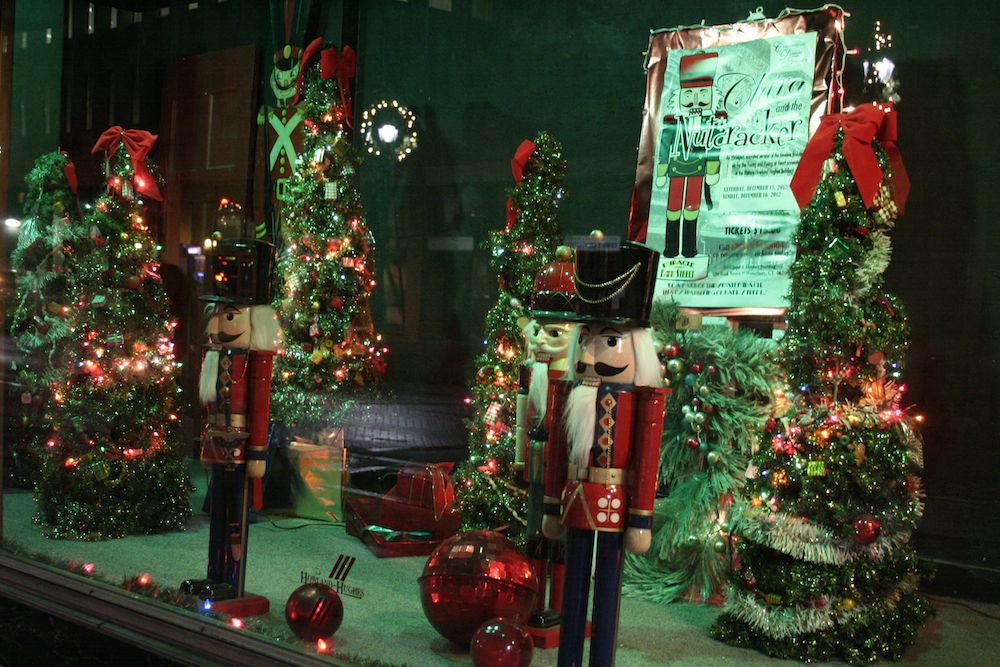
Time for the annual photos of holiday window decorations downtown! Every year, Main Street Waterbury's Design Committee encourages downtown businesses to get into the festive spirit of the season with a Holiday Window Decoration competition.

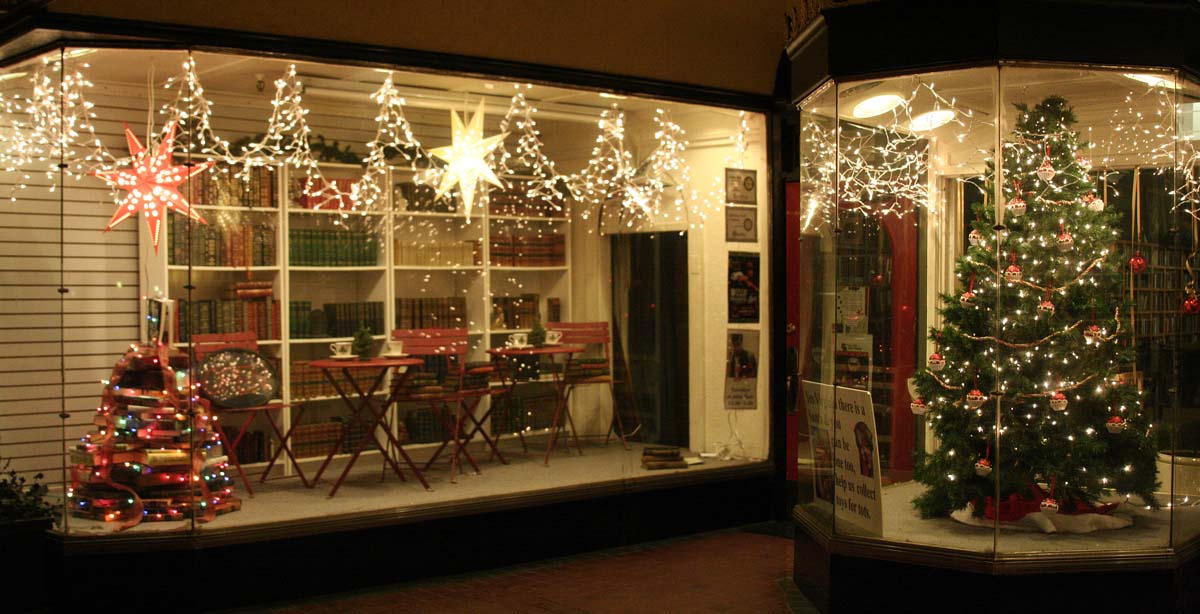
A couple of businesses, like Tony's Men's Shop and Ideal Jewelers, have tried and true designs they use every year. Others, like Shakesperience Productions and John Bale Books, seem to do something completely different every year.

The challenge for the businesses is to create an eye-catching, well-designed window display that is festive and incorporates their unique identity. Some businesses have enormous windows, some have small windows, some have tinted windows; all have their own challenges for design.

Here is a sampling of some of what's downtown this year.

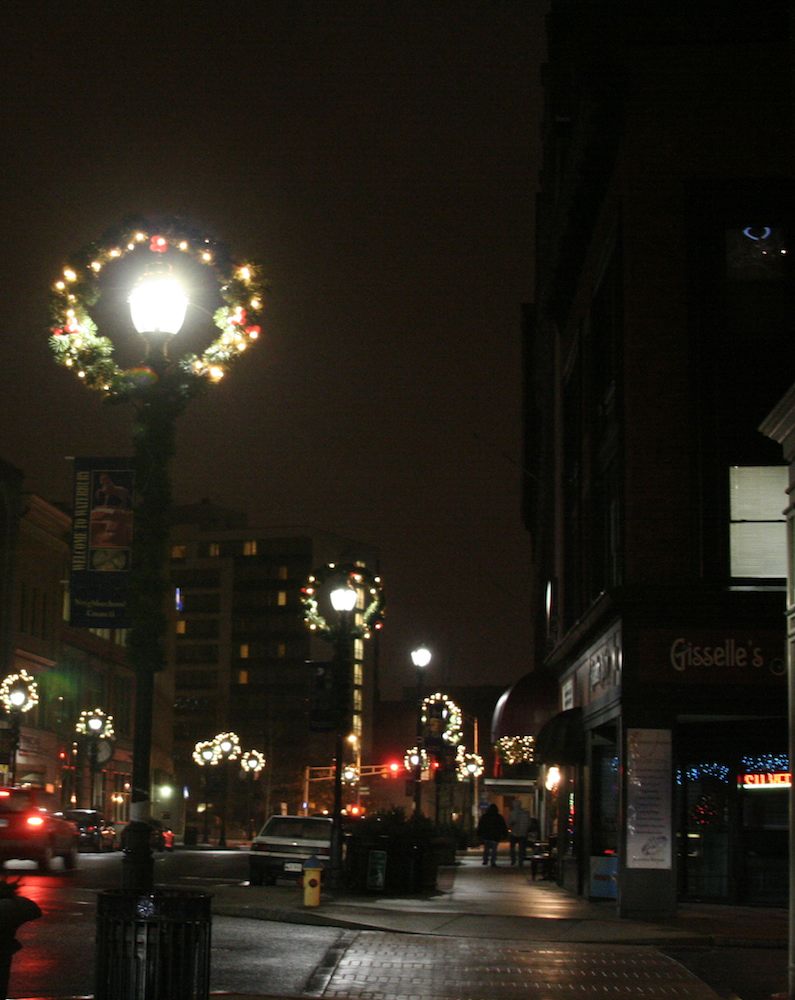
City lamp post wreaths on Bank Street. The city decorations, especially
the ones on the Green, took a bad hit this year. The shed they were stored in
was broken into and the decorations were vandalized
.


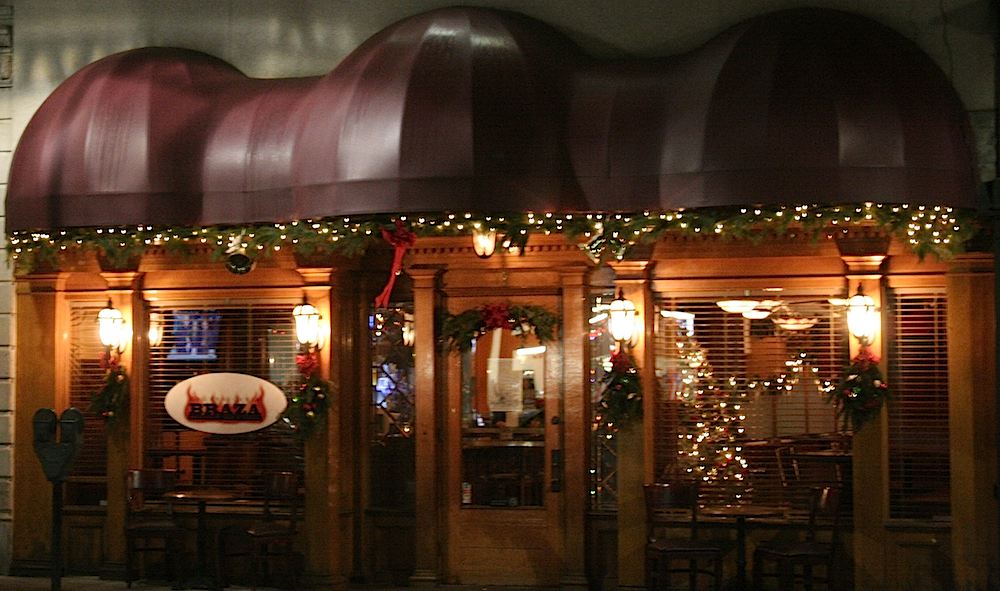
Braza on Bank Street.


Part of the window display at the Palace Theater on East Main Street.
This was the Palace's first year entering the Main Street Waterbury competition.


Rendezvous on South Main Street.


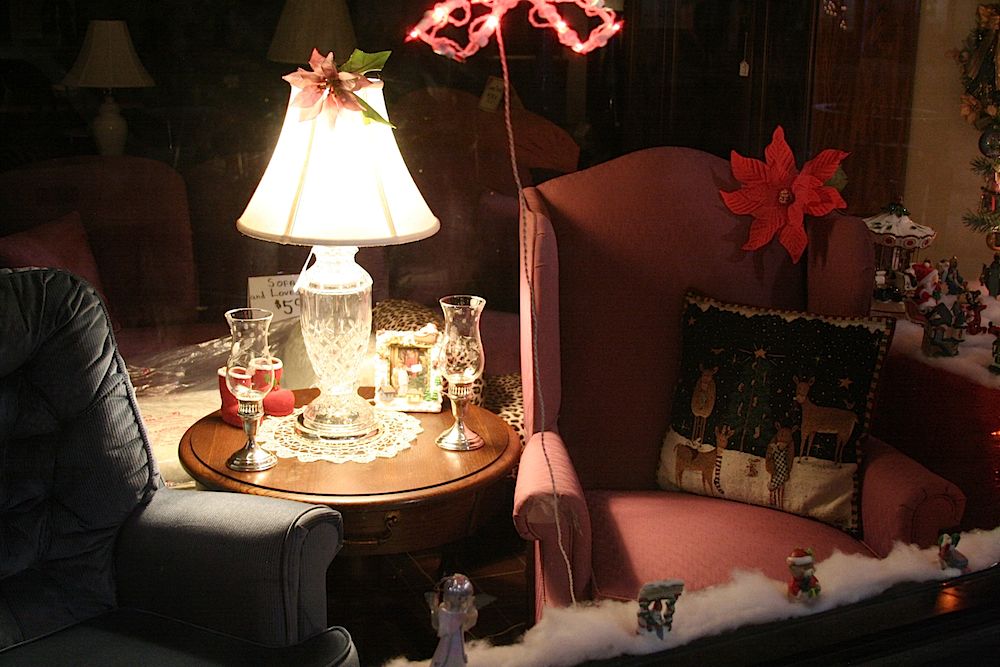
Something Old, Something New on Bank Street.


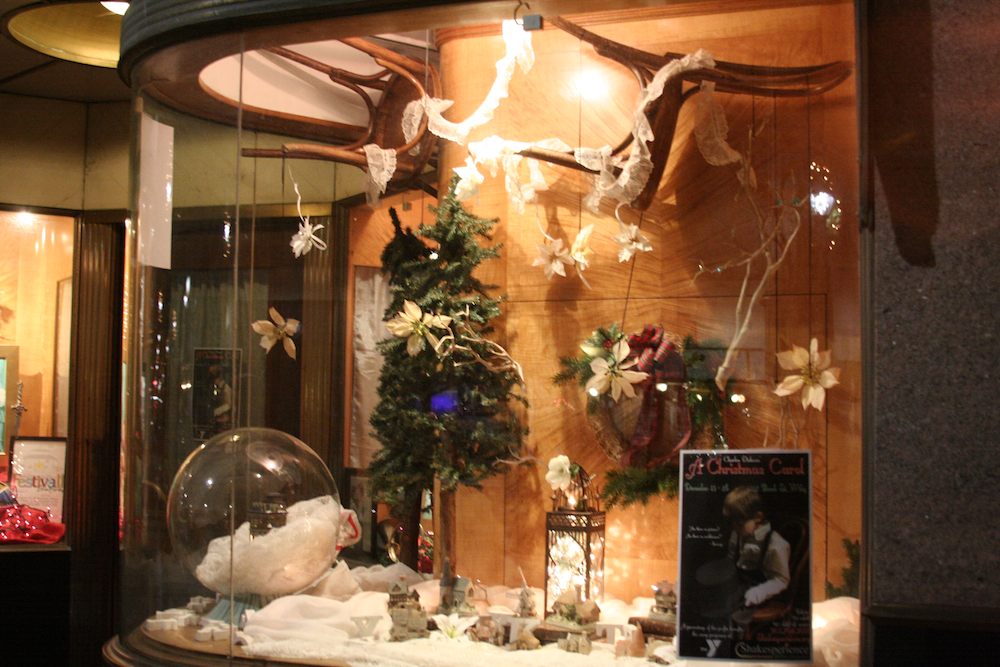
Shakesperience Productions on Bank Street.


The Connecticut Store on Bank Street.


One of Connecticut Dance Theater's windows on Bank Street.


Connecticut Dance Theater's other window on Bank Street.


Princess Lingerie's candy theme on Grand Street.


John Bale Books, complete with a small tree made out of books (on the left), on Grand Street.


The Joba Cafe within the John Bale Books display.

Monday, November 19, 2012

Waterbury's First Female Attorney

Attorney Susan Cecelia O'Neill (1871-1934) was a pioneer of women's history in Connecticut, but you've probably never heard of her. Little has been written. She was the second woman admitted to the Connecticut Bar; the first woman to become an attorney in Connecticut was Mary Hall of Hartford, who was admitted to the bar in 1882. Hall rarely, if ever, appeared in court, out of concern that her gender would be a distraction to the court cases.

Susan O'Neill was admitted to the Connecticut Bar on June 19, 1898. She had graduated with distinction from NYU's law school the year before, only seven years after NYU began allowing women to attend their law school. Unlike Mary Hall, O'Neill regularly argued cases in court, not only in Waterbury, but also in Bridgeport, New Haven and Hartford. She was the first woman in Connecticut to practice law in the courtrooms. Considering that Mary Hall didn't practice in the courts because it was too outrageous for a woman to do so, Susan O'Neill's career is that much more admirable.

In 1901, she became the first woman to argue a case before the Supreme Court of Connecticut. On April 24, 1904, she was admitted to and practiced before the Supreme Court of the United States (Belva A. Lockwood was the first woman to do so, in 1893).


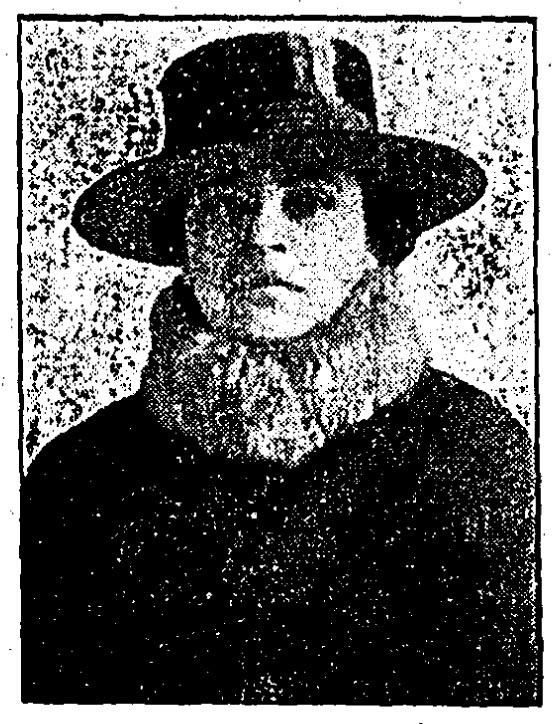
Susan C. O'Neill
From the Hartford Courant, May 21, 1922

O'Neill's family was a mixture of Irish and Yankee. Her paternal grandmother was descended from the Puritans, while her paternal grandfather was an Irish immigrant who arrived in this country in 1833. Her maternal grandparents were both Irish immigrants. The O'Neill family moved to Waterbury in 1848.

Her father, John O'Neill, was also an attorney. He served in the state legislature in 1889, introducing new legislation establishing taxes on inheritances, investments, and on telegraph and express companies; the new taxes were intended to bring balance to the state tax system, which had been wreaking havoc on city and town property assessments. He was also Dean of the Waterbury Bar, and served on the board of the Bronson Library.

The O'Neill family lived at 131 Cook Street. For many decades, the O'Neill law firm (O'Neill, O'Neill & O'Neill) was located at 77 Bank Street. Susan practiced there with her father and two brothers. In 1920, O'Neill moved her practice to 53 Leavenworth Street; in 1922, she moved to 193 Grand Street.

O'Neill moved out of the family home after World War I, living at 315 Willow Street for close to a decade. She eventually moved in with her widowed mother in Woodbury.


77 Bank Street in 2012 (built after O'Neill practiced at the location)
This is sometimes referred to as the Russell Building, since the owners who had it built were the Russell law firm.
This building was constructed in 1930, long after O'Neill had moved to a new office location.
I haven't been able to find a good photograph of the building that was here before, but I suspect
it probably looked a lot like the one to the left of the current Russell Building.


Being a female attorney during the early years of the 20th century made O'Neill something of an oddity. The American public was fascinated by the concept of a female professional. The Indiana Weekly magazine wrote the following review of her abilities in 1901:

"The young Connecticut woman attorney has a charming personality, and a clear and full voice. At a recent appearance before the highest court of the Nutmeg State she spoke for fifteen minutes without notes, showing evident mastery of the technical details of her case. She made an excellent impression."

The New Jersey Law Journal, in 1907, wrote that she was "the most remarkable woman lawyer in New England, as well as one of the youngest." The Journal noted that her father was one of the two leading lawyers of Connecticut, and then gushed "Miss O'Neill is a young woman just entering the thirties, tall and possessed of a faultless figure, a face full of girlish sweetness and has a charming personality."

O'Neill was particularly interested in how the legal system handled juveniles. She was among a growing number of people who believed that youthful offenders should be treated differently than adults. O'Neill presented a substitute bill to the state legislature in 1913 proposing that the state should be divided into five juvenile court districts, one for each congressional district. The bill specified that the assistant to the judge for each district must be a woman. At the presentation of her bill to the state legislature, O'Neill emphasized the importance of crime prevention, noting that the existing system did not address this, since they became involved only after a crime was committed. Her proposed bill required that juvenile offenders be jailed in a dedicated detention house, instead of placing them in prisons with adult offenders. Her bill also proposed giving the court jurisdiction over offenders under the age of 16 (unless the crime was “an infamous one”), and jurisdiction over cases involving misdemeanors, guardianship of orphans, and cases of non-support of children. O’Neill’s proposed bill included an appropriation of $25,000 to establish the new system. (I have not yet found out what happened to her proposal; there were other options presented at the same time.)

A few of O'Neill's cases made the newspapers. In 1901, O’Neill represented Margaret Heffernan of Bristol, who sought to regain custody of her young daughter from her husband, who had taken her away to his parents’ home in Harwinton. The description in the newspaper clearly indicates that Margaret Heffernan had been suffering from severe post-partum depression (shortly after giving birth, she declared that she hated her newborn daughter and spent months subtly abusing her), but back then the problem was not understood. The Hartford Courant (September 24, 1901) described it as a “strange condition.” The judge in the case declared that the laws of the land established the father as legal guardian (men having far more rights than women in 1901). Fortunately, the father decided to take the toddler back home, hoping that his wife would “treat it more kindly” than before. Although the case had a happy ending, it is sad to see how poorly understand post-partum depression was. When asked to comment on the case, the judge said that Margaret Heffernan must hate her husband, because why else would she have abused their child?

O'Neill also represented Mary Wright Smith of Westport, who became somewhat notorious after her attorneys were forced to sue her for payment. O'Neill wound up representing herself and another female attorney, Isabella M. Pettus of New York. The case was settled with O'Neill and Pettus taking possession of a farm in Easton owned by Smith (who subsequently swore off lawyers and began studying law for herself.)

O’Neill made state headlines for her defense of the “Flapper” in 1922 (written up in the Hartford Courant, May 21, 1922). In her argument before the Connecticut Supreme Court, she defended short skirts, noting that they allow “much freer action getting about, especially going up stairs, climbing aboard trolley cars or into autos.” She further state that short skirts “are far more sanitary than the skirts of several years ago, which swept the sidewalks and collected the germs of the careless spitters and brought diseases into homes."

Depiction of a Flapper in The Outlook magazine, June 7, 1922
Although modest by our standards, this was a radical, rebellious look in the '20s.


O’Neill also defended the choice of fabric material and color, perhaps to rebut concerns that flapper dresses were too distracting. O’Neill declared that “It is not surprising that the average girl looks chic and winsome” in the “lively” hues of their dresses.

The short haircut of the flapper was also being defended. O’Neill called the bobbed haircut “another sign of progress,” simplifying the chore involved with taking care of long hair. O’Neill also approved of knickers (or knickerbockers), commenting that the pants “are becoming quite common in the larger centers of population” and were likely to start appearing more frequently for golfing and hiking. She was also amenable to a small amount of makeup, “rouge and powder,” for girls with poor complexions.

The one trend O’Neill spoke out against was smoking: “In my opinion a girl loses charm when she smokes.”

The Courant article ended with an inspiring quote from O’Neill:
“Now that equal franchise has been granted to women I look to see a greater number of young women selecting the legal profession. Women as a rule make keen, alert counselors and are sharp in the trial of cases. The practice of law should appeal to women. It is a most honorable profession and it would please me to see women more largely represented.” 

At the time, O’Neill was one of about four women practicing law in Connecticut.

Saturday, November 17, 2012

Thanksgiving at PAL

I had a great turkey lunch at Waterbury PAL this afternoon. They served up about 100 turkeys (deep fried in peanut oil), mashed potatoes, stuffing, gravy, corn, cranberry sauce, salad, and pie to everyone who stopped by. It was a good excuse to get my dad out of the house to do something a little different from his normal schedule.


There was a DJ playing classics from the '80s, giving the little kids something to dance to.


The kids liked the giant turkey too!


For more photos of PAL's Thanksgiving event, check out their Facebook page.

Thursday, November 08, 2012

Pet Vaccination Clinic

Can't afford to take your cat or dog to the vet for vaccinations? Here's a much more affordable alternative for rabies shots and DHPP. 

Take your cat or dog (in a carrier or on a leash!) to PAL this Saturday afternoon and keep them safe from rabies and parvovirus.


Friday, November 02, 2012

Women's Suffrage

It's been 92 years since women were finally given the right to vote in this country. This is one of those history trivia bits that has astounded me ever since I was a kid. There are women alive today who were born at a time when it was illegal for them to vote, simply because they weren't men.

Women and men started advocating for women's suffrage (the right to vote) before the Civil War. Many abolitionists were also suffragists, the sort of people who have more recently been derided as "bleeding-heart liberals," the sort of people who advocate strongly for human rights and civil rights. Abolishing slavery was, not surprisingly, seen as a higher priority than women's suffrage. After the Civil War, the suffrage movement, and the women's rights movement (dress reform, allowing women to wear trousers, was among the items women had to fight for), began to pick up steam.

History tends to gloss over certain types of details. For example, after the Civil War, giving black men the right to vote in every state was controversial. In October 1865, Connecticut men voted against removing the word "white" from the U.S. Constitution. The Columbian Register, a New Haven newspaper, declared it a "glorious triumph," establishing that ours is "a white man's government" that "should be administered by white men." The paper praised voters for crossing partisan lines "to do a patriotic act."

In 1869, a Chicago advocate for universal suffrage was quoted in the Columbian Register as saying that "Western women comprehend that humanity is one--that the colored man cannot be elevated without at the same time uplifting the colored woman--and they see very clearly that through the gap in the fence made by the colored man as he passes over into citizenship, all American women will pass to the same destination."


An early suffragist in Waterbury was a Mrs. Armes, who attended Women's Suffrage meetings during the 1870s. I have not yet found more information about her.

In Connecticut, women were given the right to vote in school-related elections in 1889 (their ballots were cast separately from those cast by men). In 1895, Waterbury's State Representative Warren L. Hall put forth a bill claiming that "the better class of women" wanted the right revoked because "the undesirable class of women" had voted during the last election. Hall argued that women should not be "forced" to vote. Others, including the editor of the Waterbury Republican newspaper, argued that the extremely low turnout of women voters at school elections was proof that there was no point in giving women the right to vote.

Surprisingly, not all women wanted the right to vote. There were many women who identified themselves as "against women suffrage" only a few years before they were given the right to vote. Among them was Waterbury's Mary Williams Phipps, a graduate of Mt. Holyoke College. Phipps was active in women's organizations, including the Waterbury Women's Club, and in the Congregational Church ministries.

In contrast, Helen L. Welton was a strong advocate of women's suffrage. Welton was a business woman at a time when such a thing was rare. Her husband had become an invalid, so she took over, joining her father-in-law's real estate business. She was instrumental in developing Waterville. Her support of women's suffrage was based, at least in part, in her belief in "no taxation without representation." Her short biography in Volume 2 of Pape's History of Waterbury described her as "retaining the truly womanly traits of character" while still being highly competent in the business world. Back in 1916, those two things were considered to be mutually exclusive.

The Connecticut Association Opposed to Woman Suffrage, founded in 1911, considered the right to vote "a menace to womanhood." The Association claimed to have some 60,000 members in 1914, which included members from Waterbury. The Waterbury branch was formed in 1913 and met at Rose Hill on Prospect Street, home of Mrs. Irving Chase. The first officers of the branch were Margaret Granniss, Mrs. George Goss, and Mrs. Chauncy P. Goss.


Suffragists were willing to go to prison. Many women were arrested and jailed for as long as six months in different parts of the country.

Kate Heffelfinger, an art student and suffragist from Pennsylvania,
being released from Occoquan Prison in Virginia, circa 1917.
Heffelfinger was sentenced to six months in jail for picketing for the right to vote.
She was one of 33 suffragist women brutally beaten by prison guards at Occoquan.
Photo from the Records of the National Woman's Party, Library of Congress, American Memory website.


Connecticut women were as active in the struggle for the right to vote as anyone.

Picketers at the National Republican Convention in Chicago, June 1920.
L-R Abby Scott Baker, Florence Taylor Marsh, Sue White, Elsie Hill, and Betty Gram.
Photo from the Records of the National Woman's Party, Library of Congress, American Memory website.


On October 9, 1920, the first woman to become registered to vote in Waterbury was Mrs. Adelaide Boyd of Arch Street. Roughly 15,000 Waterbury women registered right away.

Getting the vote wasn't the end of the story. In 1927, Waterbury's Mrs. Harry S. Coe (who had served in the General Assembly in 1925) and the Connecticut League of Women Voters petitioned for women's right to serve on juries. The Connecticut Attorney General had previously ruled that women could not serve as jurors, even though they did have the right to vote.

In 1934, Connecticut's Governor Wilbur Cross unveiled a plaque honoring 31 Connecticut women pioneers in the struggle for women's suffrage. Among the women honored were Waterbury's Harriet Fowler Maltby and Elsie Rowland Chase, sister-in-law of anti-suffragist Mrs. Irving Chase.


Sunday, October 28, 2012

Clinton Comes To Waterbury

Last week, Linda McMahon was able to get the Governor of New Jersey to stump for her in Waterbury. This week, Chris Murphy brought us former President Bill Clinton. Oh yeah! Sorry, Linda, but a former President definitely trumps a Governor from some other state.

I was one of the lucky 2,500 people who got tickets. There was a little bit of last-minute change to the schedule, due to the impending "Frankenstorm." I sympathize with every political campaign being impacted by the storm--they're already exhausted, heading into the last week of campaigning after many months of effort, and now they've got one more thing to juggle. Then again, we did this last year too, only then it was snow!

I wasn't able to get good photos of Clinton. We were told in advance that no cameras would be allowed, and I didn't want to be kicked out or have my camera confiscated, so I followed the rules and brought only my cell phone. Of course, the no-camera rule is completely illogical when you consider that pretty much every audience member took photos with their cell phones, and none of the security guards or ushers seemed to care. Oh well.

For those of you who missed it, here's a random snippet of President Clinton's speech supporting Chris Murphy for Senate:


There were several other speakers: Chris Murphy, Elizabeth Esty, Senator Blumenthal, Governor Malloy, Lt. Gov. Wyman, and Mayor O'Leary.

Chris Murphy had a very good description of how hard this campaign has been (as did Blumenthal, who said that he knows how hard it is to go up against a "$50 million attack machine"). Murphy said that when he got the phone call telling him that President Clinton was coming, he "straightened his spine" and reminded himself that "we can do this."

Governor Malloy started with a speech about the impending hurricane. It was a good speech, in that he successfully instilled fear of the storm in me. When he emphasized that this will be a 36-hour storm, and that normal storms stick around for only 6 to 12 hours, I got very anxious. I started thinking maybe I should run to the store and buy supplies of some sort, I don't know what, maybe a generator and some water. At this point, judging from photos being posted on Facebook, there's no point trying to buy anything. The bread aisles are empty.


I had been hoping to get a really good seat. The event was originally planned for Library Park, which might have been nicer in terms of getting close, but the Palace was definitely warmer. I can't complain too much about where I was seated, except that there was no chance of shaking Clinton's hand. Darn!

The view from my seat on the mezzanine. We were originally one row back.
Half way through the event, the loggia seats opened up, and many of us moved up a row.


The doors were scheduled to open at 2 p.m. We arrived at 1:15, at which point the line stretched from the Palace to WAMS.


Linda McMahon sent some of her campaigners to wave signs at us while we stood in line. Seems like a real wasted effort, considering that pretty much everyone standing in line is a Democrat, and the majority of people standing in line have probably contributed to her opponent's campaign.


Today was also the walk/race held by St. Vincent DePaul. Walk in Their Footsteps/Race for Awareness is a fundraiser for the mission. The racers were cheered on as they passed by the line of people waiting to enter the Palace.


It was cold and a little breezy. We watched the storm clouds roll in while we waited in line.

Here comes Sandy!

The program started pretty quickly once we got inside. Mayor O'Leary was joined on stage by a group of kids from the PAL program. They led us in the pledge of allegiance. Side note: I've been noticing that very few people actually pledge their allegiance. Most people start with "to the flag."

Mayor O'Leary and PAL

 Although I wasn't able to get very close, it was still awesome to be in the same room as President Clinton. I didn't think it would be, but as soon as he walked on stage, I was moved with emotion, thinking "oh wow, it's really him!" I'm not usually much of a groupie. I don't get excited if I see a celebrity in real life. But some people are larger than life, and have done so much with their lives that I can't help being impressed. Bill Clinton is one of those people.

Chris Murphy and Bill Clinton.

Sunday, October 21, 2012

Vote Smart

Election Day is just around the corner. If you are planning to vote, please spend some time researching the candidates first. Be informed. Don't base your decisions on campaign rhetoric, party loyalties, or random patterns. Base your decision on solid information about each candidate. It takes time, but it is very important.

One of the best things you can do is to visit the website of each candidate that has one (see my Election Guide post from July for links). Read what they have to say about their platform, see where they stand on the issues.

Think about what you feel is important. What direction do you think the country and the state should be going? 

Think about what you read. Does it make sense? Do you understand what the candidate has stated? If you have questions, do some more research. For example, Romney's website states that he will approve the Keystone XL pipeline. Don't know what that is? Look it up.

Look at the whole picture. If a candidate promises to cut spending to certain programs, like funding for the arts and humanities, while also promising to increase spending on the military, what impact do you think that will that have?

Try doing a side-by-side comparison of the candidates for different issues, researching both what is on their websites and what they have said at debates and speeches. 

Use critical thinking when you read about the candidates. A lot of what they say is pure rhetoric, empty statements that sound good, but have no substance.

Another place to look for information are fact checker sites. Be careful: many sites claiming to be fact checkers are partisan, supporting one side over the other. You may need to fact check the fact checkers (crazy world!).

Fact checker sites that seem to be trustworthy include The Washington Post, FactCheck.org, PolitiFact.com, and, of course, Snopes.com, which has tackled some of the more popular political rumors make the rounds of Facebook and email.


Don't forget to research the local-level candidates. They may not get as much media coverage as national-level candidates, but they are just as important.
 

Sunday, October 14, 2012

Landlords vs. Tenants

I've been waiting months for the new laws regarding blighted rental properties to take effect. Connecticut's new law (Sections 3 and 4 of HB 5319) became effective on October 1 and imposes harsher fines for landlords who refuse to clean up their properties, and places liens on the properties. It also establishes willful violation of blight regulations as a misdemeanor criminal offense. This is the part I like best--a slumlord who lives in Stamford and refuses to clean up his rental property in Waterbury can be forced to come here to be held accountable. Before this legislation, nothing could be done about that Stamford-based slumlord.

Today's Rep-Am had a very disheartening article related to this topic. Each municipality with an existing blight ordinance is required to update it to reflect the new laws. Waterbury's Board of Aldermen are dragging their heels on this, after being told by landlords that they shouldn't be held accountable for the messes created by their tenants.

There has been a growing tension between landlords and tenants in recent years. As cities have grown tougher on blight, landlords have begun fighting anti-blight ordinances.

Before any landlords get upset at what I'm writing, let me say that I know what they are talking about. I know there are bad tenants out there. I know there are tenants who will trash the apartment, rip out copper pipes, smash holes in the walls and doors, leave a foot-thick layer of dog feces and urine in the basement, pull ceiling fans out of the ceiling and claim it fell on them and injured them. I know there are tenants who leave behind furniture, clothing, garbage. I also know that in every case I know of a tenant trashing an apartment, the landlord never did any sort of background check before renting to them. I hope all landlords at least require a security deposit to pay for the cleanup. That's what a security deposit is for.

Landlords: if you know your tenant is trashing your property, if you are there regularly to clean up after them, REPORT THEM. Don't sit back and wait for the city to come after you. Be pro-active. If your property is blighted enough for the city to get involved, you should have done something about it long before the city noticed. If your tenant is creating blight on your property, call the Police Department at 203-574-6920 and ask for the Blight Enforcement & Control Division. If your tenant trashes your property and you don't take action, then you should expect to be held responsible.

My interpretation of the new state ordinance is that it is intended to target slumlords. "Willful violation" of anti-blight laws is very different from landlords who need help with bad tenants, with illegal dumping on their property, with lack of resources. The law is intended to target the landlords who just don't care.

Take, for example, the owner of 76 Oak Street. The property has fallen into a blighted state over the past five years, after having been acquired by someone in Stamford in 2006. I have been complaining about the blight for years, but because the owner is out of town, the city hasn't been able to do much.

This summer, a new tenant moved in and made an agreement with the landlord to clean up the property. The tenant came in with a machete, a weed whacker, and some friends and made huge progress in clearing out overgrown weeds and trees that had grown up through the fence and were leaning precariously over my garage. The next step was to haul away the mountain of debris that fills up a quarter of the back yard. The landlord suddenly reneged on his promise to pay the tenant for the labor and the cost of removing the debris. The tenant can't afford to haul away the debris on his own, so all cleanup work stopped. The tenant has also complained to the landlord about the tree branch that has fallen on the roof and appears to be causing the roof to leak, which in turn appears to have caused part of the second floor to collapse. The landlord refuses to do anything about the leaking roof.

There are a lot of bad landlords in my neighborhood. One neighbor has told us that the heat duct no longer goes to the second floor, and her landlord refuses to fix it. The neighbor also says that the landlord has threatened them with eviction if they complain to HUD.

One of the houses across the street has been owned by Abreu Realty since 2007. Until a few weeks ago, there was a massive dead tree in the front yard that made everyone nervous, wondering if someone would be killed by a falling branch. The landlord refused to get rid of the tree, saying it wasn't his responsibility. It took a lot of pressure, but the tree is now gone. Meanwhile, however, take a look at the some of rest of the property:

254 Wood Street

The gutter on the porch has foot-tall grass growing in it (or did before the cold weather started). The porch slats are broken and have been for years. The porch steps are slick with mold. What kind of tenant does the landlord think he will attract when the property looks like this? Why would a tenant care about keeping the property clean when the landlord clearly does not care about how it looks?

We absolutely need to have an ordinance making blight a criminal offense. I have seen first hand that the city can't enforce anti-blight laws if there are no real penalties involved. There are too many landlords that just don't care.